A mandate begins long before the process — with understanding what the business is truly worth, and to whom.
Sell-side. We work with founders and shareholders who have built something valuable and are weighing the right moment and the right partner. We prepare the company, shape its narrative, and run a disciplined, fully confidential process — to a signing that protects price, people and legacy.
Buy-side. For acquirers who understand that, in luxury and in heritage, the right acquisition is rarely the cheapest one, we source proprietary opportunities, conduct sector due diligence, and structure approaches that respect the identity of the target.
We help companies structure and raise growth capital — convertible instruments, bridge financing, institutional rounds. Having operated in both private and listed environments, we bring the investor's perspective to the table: the equity story, the materials and the cadence that let capital understand, and fund, the strategy. The investor-relations discipline is built in, not bolted on.
We work on a strictly confidential basis. Mandates are not publicly disclosed without client consent. Selected references available upon request, under NDA.
We choose depth over breadth, operating where we know the economics, the buyers, and the difference between a brand and a business.
Heritage maisons and family-owned companies. Fashion, home linen, perfume, leather goods, gastronomy, hospitality. We understand the specific economics of heritage brands: the role of founder identity in enterprise value, the challenge of transmitting savoir-faire, the difference between a brand and a business.
Biopharmaceuticals, medtech, digital health, gene therapy. Listed and private companies, across European and North American markets. Our healthcare practice is rooted in decades of senior corporate-finance experience, including the CFO seat at a Paris-listed gene therapy company. We understand regulatory environments, clinical-development economics, and the dynamics of financing early- and growth-stage businesses.
Where the two worlds meet. A corrective lens is a medical object; the frame, a fashion object. Eyewear is the proof that our two worlds were never truly separate.
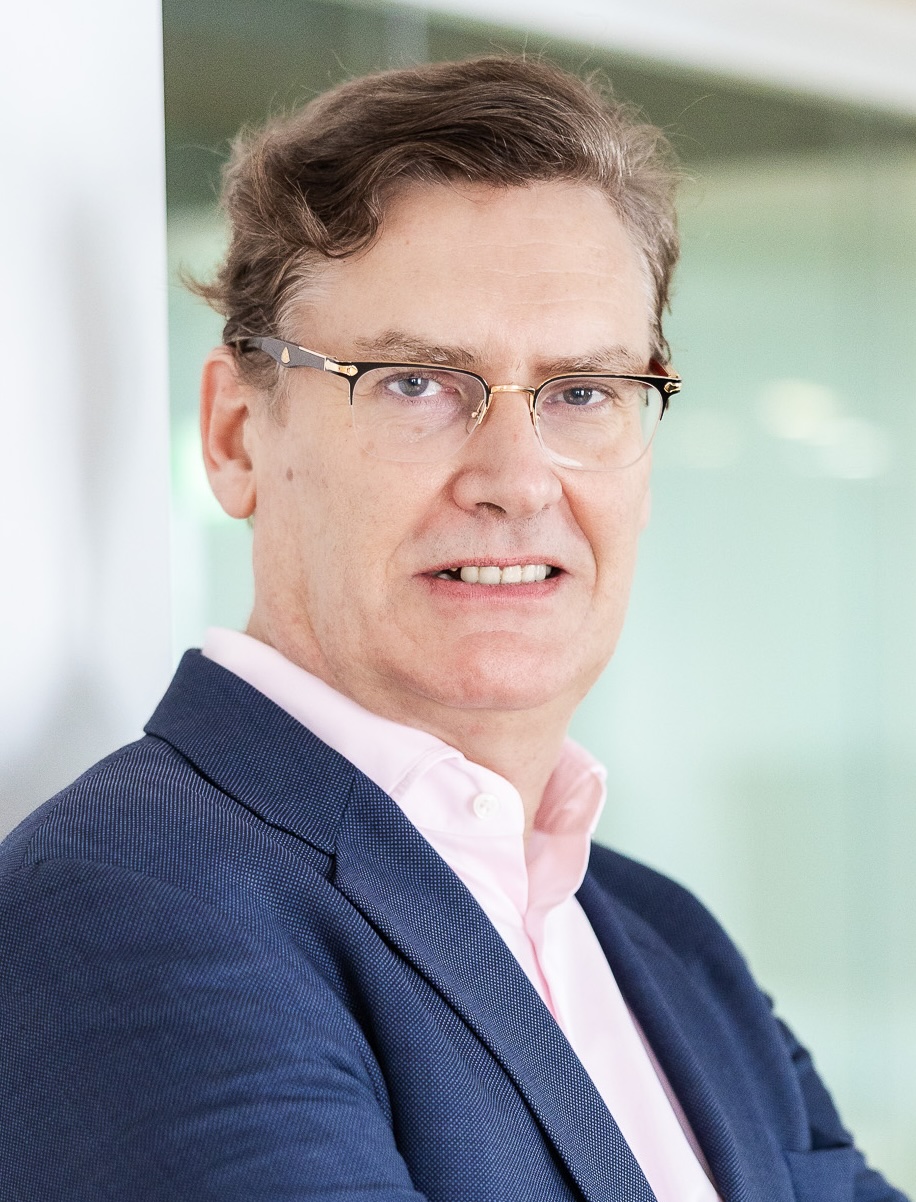
I have spent nearly three decades at the intersection of finance, aesthetics, and sound — not because I could not choose between them, but because I believe the intersection is more interesting than any of the disciplines alone.
As CFO of GenSight Biologics, a Paris-listed gene therapy company, I steered its financing strategy through a demanding capital markets environment, led investor relations, and served as interim Deputy CEO in early 2026. Before that, I built Blueballoon Capital as a boutique advisory practice focused on two sectors I understand deeply: luxury brands and healthcare. That healthcare conviction was earned over sixteen years as Chief Investment Officer and Head of Investor Relations at Cegedim, the listed healthcare-technology group, where I arranged €1.9 billion in financing and led the M&A behind acquisitions including Médimust and Ximantix.
I am based in Paris, at 10 Place Vendôme. I work in French and English, and across healthcare and luxury without preferring one to the other. If you are considering a transaction and want a conversation with someone who understands both the numbers and the story behind them — I would be glad to speak.
Further references available in confidence, by introduction.
A personal reflection on the business of luxury. One market moment, one point of view, three hundred words — published on LinkedIn, archived here.
There is a tendency, in financial circles, to read every cost-cutting announcement as distress. When a luxury house reduces headcount, closes doors, or revisits its brand architecture, the market reaches for the word crisis. With Kering, I think that framing misses something important.
What François-Henri Pinault is navigating is not a balance sheet problem dressed in strategic language. It is a genuine question about what a multi-brand luxury group is for in 2026 — when the logic of LVMH has so thoroughly dominated the conversation that every other model looks like a concession.
Gucci remains the central tension. A brand that defined a decade of maximalist desire now has to earn relevance again, quietly, without the theater of a reinvention. Sabato De Sarno's direction is measured — perhaps too measured for an impatient market. But patience, in luxury, is not weakness. It is the whole point.
What interests me more is what Kering does with its smaller houses. Bottega Veneta has proven that radical creative coherence can rebuild desire from near silence. That lesson is available to the group. The question is whether the holding structure allows it to be applied with the same discipline across a portfolio.
Kering is not in retreat. It is in the difficult, unglamorous work of deciding what it actually believes about luxury — and building accordingly.
We do not have a contact form. We have an email address — and we read every message ourselves. If a time suits you better than a message, reserve one directly.